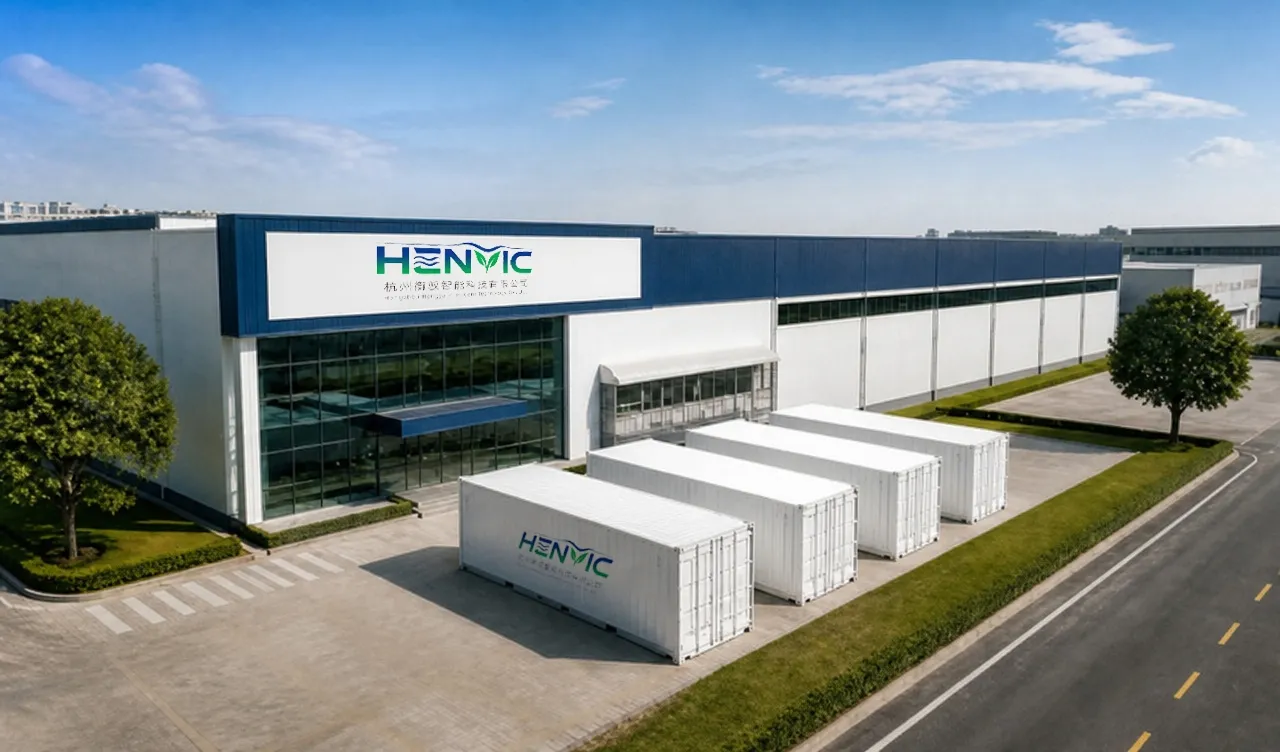
Calling a container farm a factory is not a metaphor. It is the most literal description of what the operation has become. Inside the box, inputs are metered, processes are controlled, output is scheduled, and the person in charge is no longer cultivating a field against the weather but supervising a production line. That reframing buys real advantages—consistency, predictability, repeatability—and it brings two constraints that open-field agriculture never had to confront in quite this form. A factory needs a workforce trained to run process equipment. A factory runs on energy that must be bought every single day. For container farming, these are not secondary considerations. They are the two variables that most often decide whether a unit survives.
From Grower to Process Operator
Industrialisation first changes who works in the farm and what the job asks of them.
A field grower reads land, weather, soil and plant condition, and makes judgment calls shaped by years outdoors. That knowledge is contextual, seasonal and largely tacit. A container's operating manual demands something different: someone who can read sensor logs, act on a threshold alarm, confirm that a dosing pump is calibrated, and hold a maintenance schedule. The skill set sits closer to a process technician than to a farmer.
In theory this is a simplification—the box removes the weather, so the operator no longer has to outguess the sky. In practice it swaps one difficulty for another. Field growing is forgiving enough that approximate decisions can survive; a missed irrigation window is a setback, not a catastrophe. A sealed, high-density, recirculating environment is not forgiving. A clogged emitter, a failing chiller or a nutrient-dosing error can damage an entire crop within hours, because every plant in the box shares the same water, air and light. The operator is not managing a field but a closed loop, and closed loops punish small failures severely.
The Scarcity of the Right Operator
The economics then run into a labour-market problem that few business plans confront. There is no established occupational category for container farm technicians, so recruitment has to draw from two imperfect pools.
Growers understand plants but often lack the electrical, mechanical and data fluency the equipment assumes. Technicians understand the equipment but often miss the subtle biological signals—leaf colour, turgor, root condition—that reveal a crop drifting out of its comfortable range. The operators who succeed are hybrids, and hybrids are scarce, which makes them expensive. A person capable of running the box, diagnosing the system and reading the plants commands a salary closer to that of an industrial process engineer than an agricultural worker—roughly thirty to fifty thousand dollars a year in developed markets, and considerably more where the role includes commercial responsibility.
Set that against a facility producing perhaps ten tonnes of premium greens a year, and labour frequently becomes the second-largest cost after electricity. Unlike electricity, it cannot be sited away by relocating the box.
The Single-Operator Trap
A related structural weakness is that many container farms are built around one indispensable person. Because the environment is sealed and the cycles are short, a single experienced operator can run a small facility. That efficiency is also a fragility. One person's illness, resignation or extended leave can compromise the harvest, and there is no bench to draw from.
Scaling does not fix this automatically. Opening a second site with the same single-operator structure multiplies the risk rather than diversifying it. Operators who manage it well treat the knowledge as an asset to be written down—standard procedures, parameter logs, documented maintenance intervals—so a new hire reaches competence in weeks rather than seasons. That documentation discipline is what separates an industrial operation from an artisanal one, and it is often the difference between a company that can replicate and one that stalls.
The Automation Promise and Its Price
The obvious answer to labour scarcity is automation. Robotics for seeding, transplanting, harvesting and packaging are advancing steadily and do reduce human hours per kilogram. Automated systems also address consistency, since a machine executes the same motion the same way every cycle.
But automation relocates labour rather than removing it. The people who remain must be more skilled, not less, because they now maintain and troubleshoot the automation itself. And the capital cost of robotics is substantial relative to the output of a single container, so it only pays at scale—across a network of units or in high-wage markets. For a small independent operator the numbers frequently fail to close, and manual operation persists despite its fragility.
The Energy Ledger
If labour is the personnel constraint, energy is the operational one, and it is the more absolute of the two. A fully artificial-light container farm replaces sunlight with electricity, and that substitution defines its entire cost structure.
Lighting to deliver adequate photosynthetic photon flux across a multi-tier canopy draws on the order of ten to fifteen kilowatts of LED capacity in a typical unit. Run sixteen to eighteen hours a day, the lights alone consume roughly two hundred kilowatt-hours daily. Climate control—removing the heat those lights generate, dehumidifying, circulating air—typically adds another forty to fifty percent. A working container farm commonly lands between four hundred and six hundred kilowatt-hours a day, or one hundred and fifty to two hundred and twenty thousand kilowatt-hours a year.
Spread across ten tonnes of produce, that is fifteen to twenty-two kilowatt-hours per kilogram. No amount of operational excellence moves this number very far. It is a physical consequence of replacing the sun, and it behaves like a law rather than a variable.
Electricity Price as a Site-Selection Decision
The implication is blunt: energy price is not one factor among many in site selection. It is the factor.
At ten cents per kilowatt-hour, a farm consuming one hundred and eighty thousand kilowatt-hours annually spends about eighteen thousand dollars on power, or roughly 1.80 dollars per kilogram. At twenty cents, the same operation spends thirty-six thousand dollars and reaches about 3.60 dollars per kilogram. The technology, the crop and the management can be identical; the tariff alone can move a project from marginal to unviable.
This is why container farms cluster where electricity is cheap—near hydroelectric capacity, in regions with favourable industrial rates, or where on-site renewables can carry a meaningful share of the load. It also explains why the model struggles in high-tariff urban markets, precisely the places where the "grow it where you eat it" argument is strongest. The tension between proximity and power price remains one of the central unresolved contradictions of urban container farming.
Grid Dependence and the Carbon Condition
Two further consequences follow from the energy dependence.
The first is fragility. A container farm without backup generation is only as reliable as its grid. A power failure of a few hours can stress or kill a crop, and in a business whose entire selling proposition is certainty, an unprotected supply is an obvious exposure. Operators who take the argument seriously install generators or battery storage, but that adds capital cost and is frequently cut from cost-sensitive projects—quietly undermining the resilience the box was meant to deliver.
The second is the carbon question. A container farm running on a coal-heavy grid may carry a higher emissions footprint per kilogram than field-grown produce, because it substitutes electricity for sunlight and for the transport leg. The green credentials improve sharply where the grid is low-carbon or where the site is coupled with solar or wind. Without that condition, the environmental narrative and the economics pull in opposite directions, and neither is easy to repair.
Where Labour and Energy Meet
Treating these two dilemmas as separate understates the problem, because they interact—and the interaction is the crux of the industrialisation argument.
Automation addresses labour scarcity but raises capital intensity, and capital intensity demands higher output per unit. Higher output in a container farm is a direct function of light, and light is electricity. Pursuing labour efficiency therefore tends to increase energy intensity. Conversely, holding energy use down means accepting lower light levels or fewer tiers, which shrinks the output over which fixed labour costs must be spread. The two constraints pull against each other, and management is largely an exercise in finding the least painful point on that trade-off curve.
The Industrial Bargain
The container farm buys climate independence with a workforce that must be recruited, trained and retained in a market that does not yet know it needs them. It buys year-round production with an energy bill that no operational cleverness can eliminate. Neither problem invalidates the model. Both reshape it.
Stripped to its essentials, the container farm is a business that has traded two traditional agricultural inputs—land and weather—for two industrial ones: skilled labour and purchased energy. That bargain is worth taking in some places and not in others. It works where power is cheap or renewable, where customers will pay a premium per kilogram, and where a trained operator can be found or developed. The technology functions wherever the box is delivered. The business functions only where those two inputs are affordable—and understanding that distinction is what separates the operators who build chains from the ones who build demonstrations.