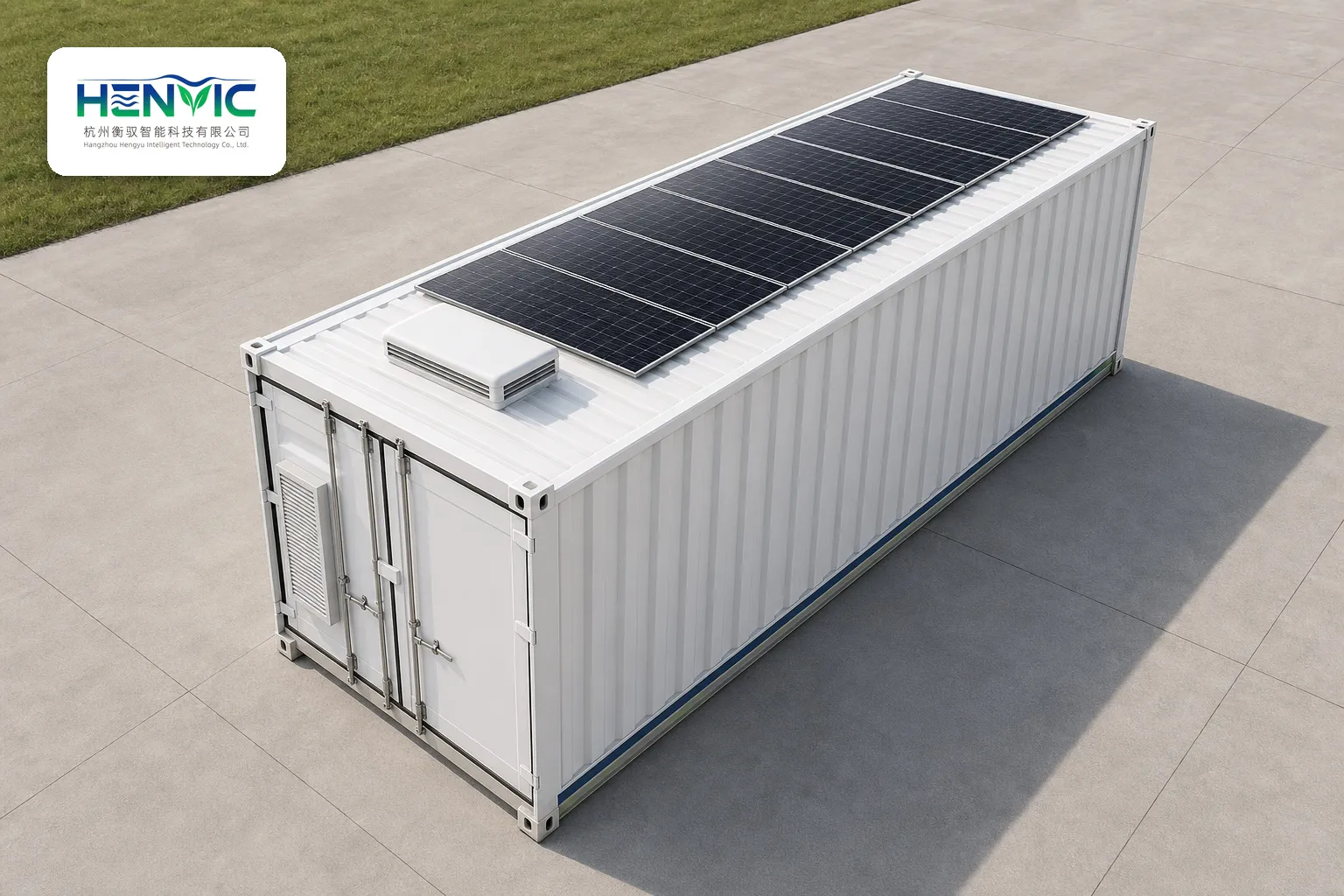
The phrase "successful mushroom cultivation" conceals three completely different kinds of achievement, and most case studies fail because they mix them. Engineering success means achieving repeatable, uniform, year-round production at a defined grade — Japan's achievement. Scale-and-integration success means driving unit cost down through industrial throughput and vertical integration — the Dutch and North American achievement. Commercial-model success means finding a channel where the product earns a price that justifies the production cost — which is a market problem, not a growing problem, and is where most container-based ventures succeed or die. A fourth category, fermentation success, involves not cultivating mushrooms at all but growing fungal mycelium in tanks, and it belongs in this discussion only because it shares the organism and none of the horticulture.
The following cases are organised along that distinction, because the lessons do not transfer between them.
1. Japan: The Origin of Industrialised Mushroom Cultivation
Japan is the country that turned mushroom growing from a seasonal forest activity into a climate-controlled manufacturing operation, and almost every automated mushroom facility in the world today descends from its template.
The founding achievement was maitake. In 1983, the Japanese company Hokuto succeeded in fruiting Grifola frondosa — the maitake, a species that had previously been harvested wild, unpredictably, and only in autumn — under controlled conditions indoors, year-round. This is the single most important event in the sector's modern history, and it is routinely cited in industry histories as the origin of the factory mushroom. Species that had been forest products became scheduleable crops.
The second achievement was the bottle system. Japan industrialised cultivation around rigid polypropylene bottles of roughly 800–1,100 mL filled with sterilised supplemented sawdust, fitted with a filter cap, inoculated through the cap, incubated in stacks, fruited through an opened neck, and then mechanically emptied, washed and refilled. The system's virtue is that the bottle is the unit of manipulation, not the mushroom — which is precisely what allows filling, sterilisation, inoculation, incubation transport, harvesting, and washing to be mechanised. Japan's enoki, maitake, shimeji and king oyster production is overwhelmingly bottle-based, and the resulting facilities have more in common with a modern brewery than a farm.
The flagship company is Yukiguni Maitake. Founded in the early 1980s, the company scaled maitake from a cultivated novelty into a mass-market product, and in the early 1990s it brought automated bottle cultivation online at its Hokkaido facility. Its product range later extended into enoki, bunashimeji, and other species, and it became a listed company with production and sales operations extending beyond Japan. As an industry case, what it demonstrates is the value of process ownership: the company did not merely grow mushrooms well, it developed and controlled the bottle-filling, sterilisation, inoculation and environmental-control equipment as an integrated system.
Enoki is the clearest species-specific success. Flammulina filiformis in its cultivated form — long, pale, uniformly slender stipes in tight bundles — is arguably the most fully engineered vegetable in the world. The morphology is not natural; it is produced by the deliberate combination of cold fruiting temperature (roughly 5–10 °C), low light, and elevated CO₂ (in the region of 2,000–4,000 ppm) during stem elongation, which suppresses cap expansion and drives vertical growth. Then, late in the cycle, conditions are adjusted so the caps develop colour and correct form before harvest. The bottle system, the climate recipe and the mechanical handling all combine to produce a product that is externally uniform and internally identical across every unit sold — an achievement of industrial standardisation that no other fresh vegetable matches.
Why it worked. Three factors, in order of importance. First, complete climate control with recipe management, which turned an organism with a narrow tolerable band into a reliable industrial process. Second, substrate supply industrialisation — sawdust, bran and supplements purchased, mixed, sterilised and formulated at industrial scale, with the contamination risk pushed upstream into controlled operations. Third, domestic market structure: a dense, high-income, quality-sensitive retail market with a cultural familiarity with these species, willing to pay for uniform, clean, year-round product. Japanese success is not a technology story alone; it is a technology story matched to a market that valued exactly what the technology delivered.
2. The Netherlands and Poland: The Agaricus Industrial Model
The button mushroom (Agaricus bisporus) is a fundamentally different engineering problem fromenoki, and the European success story is correspondingly different: it is about tray systems, mechanisation, and the industrialisation of compost.
The Dutch innovation was the shelf-and-tray system combined with phase-controlled composting. Rather than growing beds in sheds on a seasonal rhythm, Dutch producers developed multi-tier shelves loaded with compost-filled trays, moved by overhead gantries or rail systems between purpose-built rooms for each phase of the cycle: composting, pasteurisation and conditioning, spawn run, case-run, and cropping with two or three flushes. This is the "two-zone" or "three-zone" system that displaced earlier single-shed practice, and its technical logic is that each phase has incompatible requirements, so separating them into rooms allows each to be optimised independently.
The composting stage is the crux. Agaricus grows on a microbially conditioned substrate, not a sterilised one, and the phase-I (outdoor or bunker composting to roughly 65–75 °C) and phase-II (pasteurisation and selective conditioning at 58–60 °C, then a controlled cool-down) phases are where the substrate is rendered selective for the crop fungus. Doing this at industrial scale, with odour and leachate controlled, is where the capital and the expertise sit. Dutch equipment and process consultancies exported this entire system globally, and it remains the basis of commercial button production in Europe, North America, Australia and China.
Mechanisation followed the trays. Because the compost arrives in a tray, harvesters mounted on gantries can pass over each tier, and the picking itself has been progressively mechanised — first through conveyor-based picking lines that bring the tray to a stationary picker, then through robotic harvesting with vision-based detection and cutting. Casing, watering, and spent-compost removal are likewise tray-based operations. The result is that Dutch and Polish facilities achieve yields per unit of growing area that are the highest in the world, and a labour input per kilogram that conventional shed growing cannot approach.
Poland's success is the capacity migration case. Over roughly two decades, Poland became the largest mushroom producer in the European Union, displacing the Netherlands in volume terms, on the strength of lower labour and energy costs combined with adopted Dutch and Polish-designed tray technology. This is an instructive case because it shows that a mature, well-documented production system is genuinely transferable: a country without a centuries-old mushroom tradition was able to build a dominant industry by importing the technical template and competing on operating cost. The corollary is that once the technology is commoditised, the margin migrates to whoever has the lowest input costs — which is why western European producers have shifted toward premium, organic, and specialty segments rather than defending volume.
3. North America: Integration and Specialty Diversification
The North American story is less about process invention than about consolidation and channel development, with one strong specialty-success component.
Monterey Mushrooms is the reference case for scale. Founded in the early 1970s, the company became the largest Agaricus producer in North America, operating multiple farms across several US states and Mexico and supplying the fresh market and the food-service sector at nationwide volume. Its model is vertically integrated, tray-based, and heavily mechanised, and its success criterion is unambiguous: it sells commodity mushrooms at commodity prices at a cost structure only achievable at scale. This is a case where the format is not a container or a small facility but an industrial complex, and it is worth stating plainly that the largest commercial mushroom successes in the West are of this type, not of the distributed-container type.
Phillips Mushroom Farms in Pennsylvania represents the family-owned, long-established version of the same model, with a substantial portfolio spanning white, brown (cremini and portobello), and specialty species, and a strong emphasis on the food-service and retail supply chain. Pennsylvania remains the dominant US mushroom-producing state, and the concentration of the industry there — in a microclimate and with a specialised labour pool, suppliers, composters and brokers — is itself part of the success mechanism. Cluster effects are real in this industry.
The specialty segment is where the growth is. Over the past decade, US demand for oyster, shiitake, lion's mane, king oyster, maitake and other species has grown substantially, driven by culinary interest, functional-food claims around beta-glucans, hericenones and erinacines, and the persistence of plant-based eating trends. This has created room for smaller, regionally focused operations selling to chefs, farmers' markets, specialty grocers and direct-to-consumer channels — a segment where proximity, freshness and provenance earn a premium that commodity supply cannot command. It is this segment, not the button mushroom business, that the container-farm format has tried to serve.
4. The Container and Distributed Model: An Honest Reading
This is the case most relevant to anyone reading about mushroom pods, and it requires the most careful assessment, because the format's public narrative outruns its commercial record.
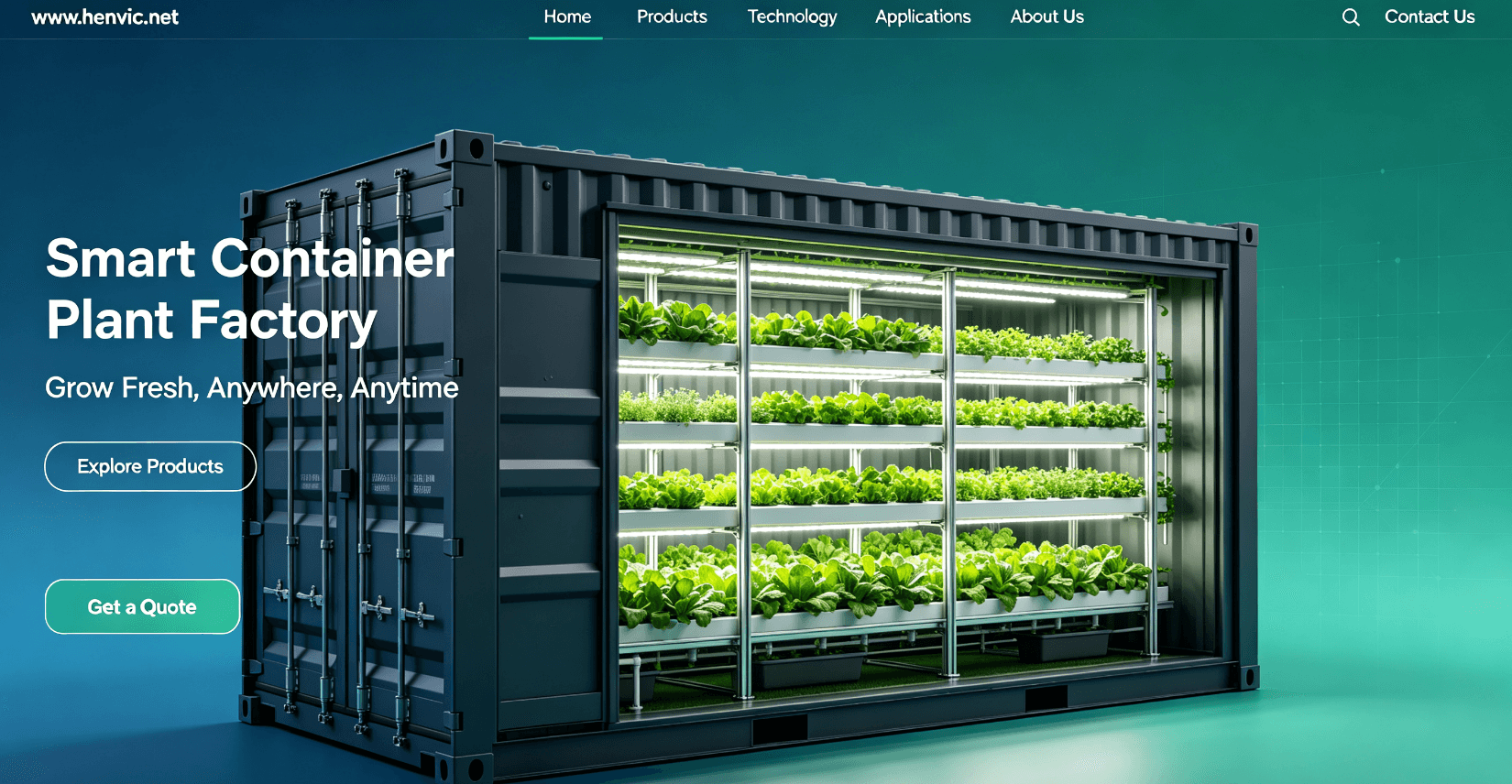
The strongest example is the distributed urban mushroom farm. The best-known instance is Smallhold, founded in 2016–2017 in Brooklyn, New York, which built container-based, climate-controlled mushroom farms inside or adjacent to the cities it served and supplied oyster, lion's mane and other specialty species to restaurants, grocers and distributors on a short supply chain. The model's logic is sound and worth stating clearly: specialty mushrooms are highly perishable and travel badly, so a farm inside the city can deliver fresher product, at a better service frequency, than a regional grower can. The company expanded to multiple urban sites and raised substantial venture capital on that thesis.
The outcome is the instructive part. That venture has since restructured under financial pressure, and it should be cited as evidence about the boundary of the model rather than as a failure of the technology. What the case demonstrates, reported candidly, is that:
• The agronomic and engineering challenge is solvable. Container-format specialty mushroom production at consistent commercial grade is achievable.
• The unit economics are the hard part, not the biology. Labour for harvesting, grading, cleaning and cold-chain handling is high and resists automation at container scale; energy for refrigeration in a warm, saturated environment is significant; contamination risk is systemic and a single bad substrate batch costs a month of production.
• The channel must genuinely reward proximity. Selling a specialty mushroom into a wholesale market at a commodity-adjacent price leaves the cost structure stranded. The premium has to come from chefs, specialty retail, or direct sale, and it has to be large enough to cover the capital.
• Scale economics work against you in this format. A distributed network of small units carries more labour, more real estate, more management overhead and less purchasing power than one large facility — the opposite of the advantage that made Monterey successful.
Other container-format entrants, including operations in Europe and Asia serving local restaurant and retail markets, have found viable niches, generally by specialising narrowly (often one or two species), charging a chef-level price, and keeping the operation small enough to be run by a founder-operator rather than a venture-funded organisation. That is a legitimate business, and it is a much more modest claim than "the container will replace the mushroom farm."
The honest conclusion for this segment is that the container mushroom farm is a viable artisanal and high-value niche operation and a poor vehicle for commodity volume. Read the marketing claims accordingly: a container can produce excellent mushrooms; whether it can produce a profitable business depends on the channel, not the box.
5. Fermentation: A Genuinely Different Success Story
The most commercially significant recent fungal successes outside China are not cultivated mushrooms at all. They are mycelial fermentation products, and the distinction matters because the engineering, the economics and the scalability are entirely different.
Quorn is the pioneer and the proof of scale. Marlow Foods, in the United Kingdom, commercialised a mycoprotein from Fusarium venenatum — a filamentous fungus grown in continuous aerobic fermentation in large stirred-tank vessels, then harvested, heat-treated to reduce RNA content, and textured into a meat substitute. The product came to market in the mid-1980s and became one of the world's most established single-cell-protein foods, with a production scale measured in tens of thousands of tonnes per year and distribution across Europe, North America and Australasia. The success factors are worth isolating: it is a fermentation process, not a horticultural one, which means it scales like a brewery — the same engineering discipline as the Japanese bottle system, but applied to biomass rather than to fruit bodies. It delivers consistent nutritional composition, a long ambient or chilled shelf life, and a cost curve that improves with vessel size. There is no substrate pasteurisation bottleneck, no contamination-by-Trichoderma drama, no morphology to govern.
The current generation extends the concept. Meati Foods, in Colorado, grows the mycelium of Neurospora crassa — the filamentous fungus long used in the classical genetics literature — in submerged fermentation and forms it into whole-cut products designed to mimic the fibre structure of meat. Nature's Fynd similarly commercialised a fungal strain isolated from a geothermal spring in Yellowstone National Park, growing it in fermentation tanks and formulating it into alternative-protein products. MyForest Foods and similar entrants have pursued mycelium-based whole cuts and bacon analogues. Several Australian and European companies have built products on cultivated or fermented fungal biomass.
Whether these ventures ultimately succeed commercially is not settled — the alternative-protein sector has seen substantial capital withdrawal and consolidation pressure, and fermentation economics depend on feedstock cost, vessel utilisation and the price the finished product can hold. But the approach is instructive, and the reason it matters to anyone interested in container cultivation is this: when the value is in the biomass rather than in the fruit body, fermentation beats cultivation on every economic dimension except consumer perception. A tank produces mycelium continuously, at predictable yield, with the contamination risk managed by standard bioprocess engineering. A fruiting chamber produces mushrooms in flushes, at the mercy of morphology and the market's judgement of a fruit body's appearance. The fermentation route has raised hundreds of millions of dollars precisely because it has a credible path to commodity cost, which cultivation does not.
6. Farmer-Scale and Development Models
A different class of success — genuinely important and consistently underreported in technology-oriented literature — comes from smallholder and cooperative mushroom cultivation in India, Kenya, Tanzania, Uganda, the Philippines, Vietnam and Indonesia.
The pattern is consistent. A grower produces oyster mushrooms on pasteurised agricultural by-products — rice straw, maize cobs, coffee husks, banana leaves, sawdust, sugarcane bagasse — inside a small, low-cost structure, using a locally fabricated or imported bag system, and sells into a local market that has no established mushroom supply. Capital requirements are low, the substrate is a waste stream rather than a purchased input, the cycle is short (oyster mushrooms fruit in roughly three to four weeks from spawning in warm climates), and the price premium over other vegetables is high because supply is scarce.
The documented success factors are distinctly non-technological. Local substrate availability determines feasibility more than climate control does. Spawn supply — reliable, contamination-free, locally produced grain or sawdust spawn — is the single most common bottleneck, and cooperatives and public extension programmes that solved spawn logistics unlocked the sector. Cold chain and market linkage determine whether a grower can sell beyond the immediate neighbourhood. Training and extension matter more than equipment sophistication. And group structuring — cooperatives, women's groups, farmer clusters — has consistently outperformed isolated individual growers, largely because it aggregates spawn production, marketing and knowledge.
The technology level in these operations is low by design: bag culture, manual or semi-manual humidification, ambient temperature with microclimate adjustment, natural or minimal lighting. What makes them successful is that the production method is matched to the ambient conditions in tropical and subtropical climates, where oyster mushrooms fruit well without refrigeration, and the market rewards any reliable local supply. Anyone designing a high-specification container system for such a market should note that these low-cost operations compete on exactly the same product at a small fraction of the capital cost.
7. What the Successful Cases Share
Read across the cases, four structural conditions recur in every durable success and are absent in most failures.
The production system was matched to the channel, not the other way round. Japan's bottle factories succeeded because the domestic market valued uniform, clean, year-round enoki and maitake at a price that covered industrial capital. Dutch and Polish tray systems succeeded because a commodity market rewards a commodity cost structure. Smallholder oyster cultivation succeeded because a local market with no prior supply pays a scarcity premium. The container ventures that struggled had a channel — commodity wholesale or an under-premium specialty market — that did not reward what the format costs.
Each success industrialised the bottleneck rather than the visible operation. For Japan, it was the bottle and the climate recipe. For the Dutch, it was compost phase-I and phase-II, with odour and leachate control, plus the tray-with-gantry handling. For Quorn, it was a continuous fermentation vessel. For smallholders, it was spawn supply. In each case the growing itself was the easy part; the commercial advantage came from controlling the constraint that everyone else struggled with.
Substrate was industrialised, not improvised. Every durable operation buys or centrally produces a formulated, heat-treated substrate, and treats it as an input with a specification. Operations that treat substrate as a byproduct they handle on the side — a common pattern in small container ventures — suffer the highest contamination losses and the least consistent yields.
Scale was matched to the cost structure. The high-volume players went large; the premium players stayed small and charged accordingly. The recurring failure pattern is intermediate: a venture funded enough to carry industrial overhead but too small to achieve industrial unit costs, selling into a market that would not pay a premium.
8. What the Failures Demonstrate
This is worth stating explicitly, because it is the most useful part of the record.
The most common failure mode in Western container mushroom ventures is not contamination and not crop failure. It is cost structure against channel. A container unit carries high capital cost per square metre of growing area, significant refrigeration load, high hand-labour intensity for harvest and cleaning, and the overhead of a distributed footprint. Those costs can be covered by a chef paying premium prices for a same-day-delivered lion's mane; they cannot be covered by selling into a wholesale market that judges the product on price per kilogram against a Polish or Mexican industrial producer. Ventures fail when the business plan implicitly assumes the premium and the market delivers the commodity.
A second failure mode is scope creep across species. Because fruiting temperatures span from 5 °C to 25 °C depending on species, and because CO₂ requirements are opposite for enoki (high CO₂ wanted) and oyster or lion's mane (low CO₂ required), a single chamber cannot serve multiple species well. Operations that start with one species, add three more to satisfy customer requests, and end up with a system that does all of them badly have reproduced a well-known error.
A third is automation deferred past the point of viability. Harvest labour in mushroom production is grinding, repetitive and hard to mechanise selectively. Operations that assumed robotics would arrive in time to fix the labour line item — largely to justify their capital raise — discovered that vision-based mushroom harvesting remains difficult, and that the format's narrow geometry (a 2.35 m container width leaves no room for the manipulators that work in open facilities) is actively hostile to automation.
9. Where the Real Opportunity Sits
Extracting the pattern into a forward statement:
High-value specialty species with a premium channel is the segment where container and small-facility production is genuinely defensible — lion's mane, king oyster, maitake, shimeji, golden oyster, and medicinal or functional species where content consistency rather than appearance drives the price. The product is perishable, the market rewards proximity, and the volumes are small enough to serve from a small unit.
Containment and reproducibility as the product is the segment with the strongest technical fit and the least price competition: certified clean-stock culture, breeding and strain development, culture-bank maintenance, research platforms, and functional-food or nutraceutical production where the buyer is paying for consistency of compound content, not for kilograms.
Fermentation-derived mycelium products is where the scalable economics live, and it is a completely different business — closer to a specialty chemicals or food-ingredients operation than to a farm.
Smallholder and cooperative cultivation in tropical and subtropical regions remains the largest success story by number of people affected, requires no novel technology, and is best served by improving spawn supply, substrate sourcing and market linkage rather than by adding climate-control equipment.
Commodity button mushroom production is not a segment that a small or container-scale entrant can enter. The Japanese and Dutch cases both show that once a species becomes a commodity, the industry consolidates into large, integrated, tray-based, heavily mechanised facilities — and the only defensible small-operator positions are premium, organic, or specialty.
Closing Assessment
The international record of mushroom cultivation success is, on close reading, a record of fit rather than of technical brilliance. Japan succeeded by industrialising a scarce forest product into a standardised, scheduleable crop, and by building the bottle system that made mechanisation possible. The Netherlands and Poland succeeded by industrialising compost and the tray, allowing commodity Agaricus to be produced at a cost no shed could match. North America succeeded by consolidating into integrated national suppliers while a specialty segment grew beneath them. Quorn succeeded by abandoning cultivation entirely in favour of fermentation, where the economics obey classical bioprocess scaling rather than horticultural ones. Smallholder programmes succeeded by matching low-cost, low-technology production to local abundance of substrate and local scarcity of mushrooms. The container ventures succeeded where they served a chef-level market with a premium specialty product, and faltered where the format's cost structure met a commodity channel. The transferable conclusion is that the biology and the climate control are the solved parts of this industry. The unsolved part is the arithmetic of matching a production cost to a market price, and no amount of engineering sophistication in a sealed steel box changes that.